
Modified bitumen roofing in Austin that handles Texas heat
Modified bitumen is the proven multi-layer system for Austin low-slope roofs: layers of reinforced membrane that stand up to heat, hail and foot traffic. We install and repair modified bitumen roofs on commercial buildings and low-slope residential sections across Austin. Call for a free inspection.
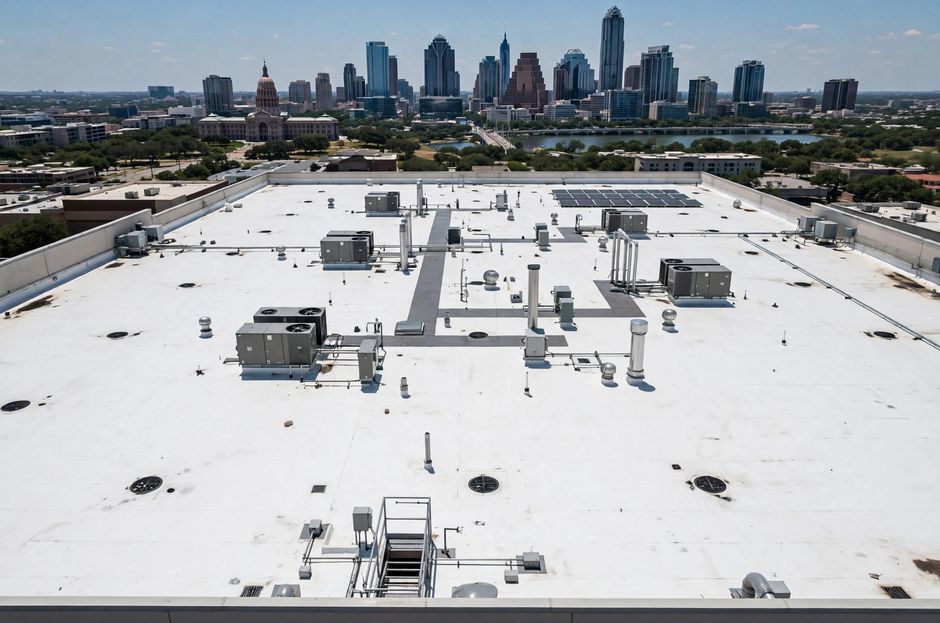
Service overview
What Modified Bitumen Roofing in austin actually involves
Modified bitumen, often called mod bit, is a built-up style system made from asphalt modified with rubber polymers and reinforced with fibreglass or polyester. It goes down in layers, so a puncture has to get through more than one sheet before it reaches the deck, and that redundancy is why it has lasted so long on Austin commercial roofs. The Austin enemies are the same as for every low-slope roof: ponding water that tests the seams, oak debris that clogs the drains, and UV that ages the exposed cap sheet. We check drainage and seams before recommending any membrane work, because the membrane is only as good as the water plan under it.
! Problems we solve
Seam splits and blisters in the cap sheet
Heat cycling opens seams and raises blisters in the cap sheet, usually at laps and penetrations. A blister that has not broken is a warning; one that has broken is a leak. We check the cap sheet across the whole field, not just the obvious spots.
Ponding water over the membrane
Water standing on a mod bit roof after a storm stresses the seams and feeds algae. We check slope to drain and drain capacity before recommending membrane work, because ponding is a drainage problem first.
Flashing failures at parapets and curbs
The membrane has to turn up at parapets and curbs, and that turn is where failures start. We check the flashing at every wall and curb, because a gap there lets water under a membrane that looks sound from the field.
Scope of work
What our Modified Bitumen Roofing service includes
A modified bitumen project is a layered system, not a single sheet. Below is what a full installation with us covers as standard.
-
01
Drainage survey and slope check
We map how water moves across the roof, check every drain, scupper and overflow, and measure the slope to drain. The drainage plan comes before the membrane choice.
-
02
Deck, insulation and base sheet
We inspect the deck, replace wet insulation, and lay the base sheet that the cap sheet bonds to. Wet insulation holds water against the deck and has to come out before the new system goes down.
-
03
Cap sheet installation and seaming
The cap sheet is installed with sealed laps and proper detailing at every curb, parapet and penetration. Laps are the roof on a mod bit system, and they get the most care.
-
04
Flashing, drains and terminations
Parapet flashing, drain baskets and terminations go on as part of the system. If the primary drain clogs with oak debris, the overflow path has to work, and we test that path rather than assuming it.
Why Austin owners choose modified bitumen
Mod bit is a layered system with real redundancy: a puncture has to beat more than one sheet. It handles foot traffic better than single-ply, and it has a long track record on Austin commercial roofs. Call and we will walk your roof and show you where the water goes.
Call (469) 779-9940Tools and methods we use on mod bit roofs
Torch and roller
Bonds the cap sheet laps with controlled heat and rolls them to a full seal. Torch work is done with fire watch and care around parapets and penetrations.
Moisture meter
Finds wet insulation and decking under a membrane that looks sound from above. Wet insulation has to come out, or it rots the new roof from below.
Seam probe
Finds the open lap before the rain does. Every lap we seal gets probed before we leave the roof.
Fall protection harness
Low-slope roofs still have edges, openings and parapets. Every crew member near an edge wears a harness anchored to a proper point.
Local execution
Modified bitumen has covered Austin commercial roofs for decades, and it still shows up on the low-slope sections of modern infill homes. The 2024 code family, effective 10 July 2025, governs new work, and commercial re-roofs have no permit exemption in Austin, unlike like-for-like residential work. Our cloudbursts are the real test: the 28 May 2025 storm dropped about two inches of rain in under an hour, and a layered roof lives or dies on whether its drains kept up. Oak leaves and acorns clog those drains, so maintenance is part of the system. If your mod bit roof ponds after rain, read why your roof leaks after heavy Austin rain and how to spot roof leak signs before they damage your attic, then call us for a free inspection.
How modified bitumen roofing runs in Austin specifically
Recent work
Available when your flat roof needs us
We answer when water is coming in
After a major rain event, a mod bit roof's question is whether the drains kept up and the laps held. We prioritise roofs with standing water and active leaks, and we carry drain stock, patch material and temporary coverings on the truck. We are open 24 hours, every day, so a leak at night still gets a voice on the phone, and we give you a straight answer on timing when you call.
How our mod bit roof installation works
Inspection and moisture scan
We walk the roof, check the laps and flashing, scan for wet insulation, and map the drainage. You get a written scope that says plainly whether the roof needs drainage work, a repair, or a replacement.
Tear-off and deck repair
Where the membrane comes off, we strip to the deck, replace wet insulation and soft decking, and prepare the surface. Wet insulation left in place will rot the new roof from below.
Underlayment and base sheet
The base sheet goes down first, giving the cap sheet a clean, bonded surface. This layer is what keeps the system together when the cap sheet takes hail and foot traffic.
What shapes the cost of modified bitumen roofing in Austin
We do not publish prices, because no two mod bit roofs price the same and a number quoted without seeing the roof would be a guess. Call (469) 779-9940 for a free inspection and we will walk the roof, check the laps and map the drainage, then give you a written estimate. The factors below are what move that estimate.
Roof size and penetration count
Square footage drives membrane material, and every curb, pipe and rooftop unit adds detailing labour. A roof crowded with equipment takes longer than an open deck.
Layers and deck condition
Wet insulation and soft decking have to come out before the new system goes down, and the number of layers changes the labour. We scan for moisture at the inspection so the estimate reflects the real scope.
Drainage and slope work
If the roof ponds, the fix may include tapered insulation or new drains. We map the drainage first so the estimate covers the job that actually solves the problem.
Rated by Austin homeowners
Modified bitumen questions, answered
How do I get a price for modified bitumen roofing in Austin TX?
Call (469) 779-9940 for a free inspection. We walk the roof, check the laps and flashing, scan for wet insulation and map the drainage, then give you a written estimate. We do not quote a price over the phone for a roof we have not seen.
Is modified bitumen good for Austin heat?
Yes. Modified bitumen is a layered, rubber-modified system built for heat cycling, and it has a long track record on Austin commercial roofs. The cap sheet and laps still need regular checks, because UV and heat open seams over time.
How is modified bitumen different from TPO or EPDM?
Modified bitumen is a multi-layer system, while TPO and EPDM are single-ply membranes. The layers give mod bit redundancy against punctures and better foot-traffic tolerance. We explain the options for your roof before you choose.
Why is my modified bitumen roof blistering?
Blisters form when heat and trapped moisture lift the cap sheet from the layer below, usually at laps. A blister that has not broken is a warning; one that has broken is a leak. We map blisters on an inspection and say which ones need repair.
Related services
Flat Roofing
Modified bitumen is one low-slope system among several. We install and repair flat and low-slope roofs of all types across Austin.
TPO Roofing
White TPO is the Austin commercial default for low-slope roofs. We install and repair it with heat-welded seams and proper drainage.
EPDM Roofing
EPDM rubber membrane is the alternative single-ply for low-slope roofs. We install and repair it with proper seam detailing.
Roof Coatings
A coating can extend a sound low-slope roof as a maintenance option. We assess whether your roof is a candidate before recommending it.
Get your modified bitumen roofing in Austin inspected this week
Ponding water and open laps do not fix themselves. Call us for a free inspection with photos and a written scope. We answer the phone around the clock.